

Think about the information a person may need during a medical appointment: current medications, allergies, previous test results, diagnoses, vaccination history, and details of earlier treatment. That information may be held by different clinics, laboratories, hospitals, or applications. Finding it quickly can be difficult, especially when a person changes providers or needs to explain their medical history again.
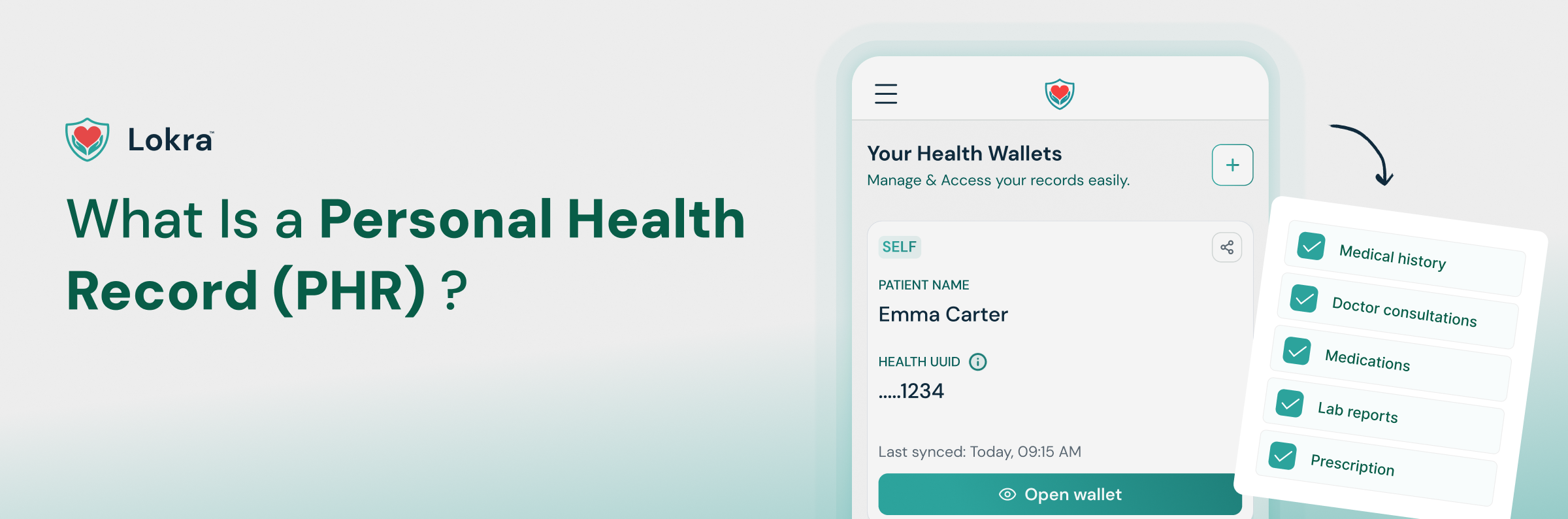
A personal health record (PHR) is one way to help individuals organize and manage health information. A digital health wallet can provide an accessible place to view or manage supported health records, depending on the product and the connections available.
In this guide, we explain what a personal health record is, how it differs from provider-focused records, what a health wallet can do, and what people should consider before using one.
What is a personal health record?
A personal health record is an electronic record or application designed to let an individual access, maintain, or manage health information about themselves—or about someone they are authorized to support. The information may include diagnoses, medications, immunizations, family medical history, provider details, and other relevant records. The exact contents depend on the person and the service being used.
A PHR may include information entered by the individual, information received from healthcare providers, or data from supported devices and services. It is important to check where each item came from and whether it has been reviewed or verified by a healthcare professional.
A personal health record can support a more informed conversation with a clinician, but it does not replace professional assessment or the official clinical record maintained by a provider.
PHR vs EHR vs EMR: what is the difference?
These terms are related, but they do not mean exactly the same thing. The distinctions can vary by country and product, but a useful general explanation is:
- Electronic Medical Record (EMR): typically a digital version of the clinical chart used within a particular practice or organization.
- Electronic Health Record (EHR): a broader clinical record designed to support care across authorized healthcare settings and providers.
- Personal Health Record (PHR): a record or application designed for individuals to access, maintain, or manage their health information.
An EHR may contain information from multiple care settings, while a PHR is oriented around the individual’s access and management of information. In practice, a personal health record may connect with provider systems, allow the person to add information, or do both. Do not assume that every PHR automatically receives records from every clinic or hospital.
The U.S. Office of the National Coordinator for Health Information Technology provides a plain-language comparison of these terms. Local terminology, regulations, and system capabilities may differ in other jurisdictions.
What information can a personal health record contain?
A useful record is organized around the information a person may need to understand or communicate their health history. Depending on the application and available data sources, this may include:
- Medication lists and prescription information
- Allergies and relevant alerts
- Diagnoses and health conditions
- Laboratory reports and diagnostic results
- Visit summaries, discharge information, and treatment history
- Immunization records
- Clinician and healthcare facility details
- Patient-entered notes or information from supported devices
Not every application supports all of these categories. Some records may be uploaded by the individual, while others may arrive through an authorized integration. A scan or photo of a report can be useful to keep, but it should not be confused with structured, verified data unless the application has processed and validated it appropriately.
People should also keep information current and tell their healthcare provider when they are unsure whether a record is complete or up to date.
How can a digital health wallet help?
A digital health wallet is a product concept that gives people a convenient way to access or manage supported health information on a digital device. Its usefulness depends on what records it can hold, how information enters the wallet, and how sharing works.
Potential benefits include:
- Convenience: relevant health information can be easier to find than scattered paper documents or files.
- Preparation: people can review available records before an appointment and identify questions to ask.
- Continuity: when changing providers or seeking a second opinion, a person may be able to share relevant information, subject to the product’s capabilities and permissions.
- Organization: a single interface may help people understand which reports or records they have and which may still be missing.
- Participation: access to personal health information can help people take a more active role in conversations about their care.
These are potential benefits, not guarantees. A wallet cannot show a record it has not received or that the user has not added, and not every healthcare provider will be connected to every service.
Privacy, consent, and trust matter
Health information is sensitive. Before using a digital health wallet, understand how the application controls access, stores information, handles sharing, and responds when a device is lost or access needs to be revoked.
Consider these questions:
- Who can view the information by default?
- Can I choose what information to share and with whom?
- How do I know whether I am sharing a single document or broader access?
- Can I review or revoke sharing permissions?
- How does the application protect access to the account and device?
- Can I identify the source and date of a record?
- What happens if I change phones or stop using the service?
Do not share one-time passwords, account credentials, or verification codes with anyone claiming to need them to view your records. Use official application channels and review the product’s privacy information. The exact legal rights and obligations depend on the country and the organizations involved.
How to get more value from your health records
- Start with the records you are likely to need, such as current medications, allergies, recent reports, and key diagnoses.
- Check dates and sources. Make a note when information is incomplete, outdated, or entered by you rather than supplied by a provider.
- Keep important contact information available, including your regular clinician and relevant facilities.
- Before an appointment, review the records and prepare questions rather than trying to interpret every result yourself.
- Share only the information needed for the purpose, using the product’s intended sharing controls.
- Ask a healthcare professional to clarify information that is confusing or appears inconsistent.
A digital record is most useful when it supports a clear conversation between a patient and a healthcare professional. It should help people find and share information—not encourage self-diagnosis based on isolated reports.
Where Lokra Health Wallet fits
Lokra’s Health Wallet and AHW positioning can be introduced here as a way for people to access supported health information through a digital experience. Before publishing, describe only capabilities that are currently available and verified by the product team. If a feature depends on a particular connection, user verification, or provider participation, state that clearly.
For readers, the most important questions are practical: what can I access, how do I connect or add records, what controls do I have when sharing information, and where can I get help? Clear answers build more trust than broad claims about having every record in one place.
Explore Lokra Health Wallet
Learn about Lokra Health Wallet and review the supported features, record sources, and sharing options available to users.
Explore Lokra Health Wallet →Frequently asked questions
What is the difference between a PHR and an EHR?
A PHR is designed around an individual’s access to and management of health information. An EHR is generally a clinical record used by healthcare professionals and may support authorized information sharing across care settings. Exact implementations vary.
Can I add my own health information to a PHR?
Many PHR applications let users add some information, but supported entry types and verification options differ. Keep clear which details are patient-entered and which come from a healthcare provider.
Can a health wallet connect to every hospital?
Not necessarily. Connections depend on the wallet, participating providers, technical integrations, permissions, and local infrastructure. Check the service’s supported sources before relying on it for a particular record.
Should I use a personal health record instead of medical advice?
No. A PHR helps organize and communicate information; it does not replace a qualified healthcare professional’s assessment, diagnosis, or treatment advice.